Where does time disappear to? With only five weeks left with SLV I thought it was about time I lock myself in an internet cafe booth and write!
I will just give a brief update on my projects for now, I'm sorry for the lack of photos!
I have surprised myself that I am enjoying youth teaching the most and really look forward to each session. I teach a class of 17-22 year old boys studying a Refrigeration and Air Conditioning vocational course in the Youth Centre. We have been doing topics like careers and hobbies as well as grammar e.g. distinguishing abstract nouns, adjectives and adverbs. They are all a bit giggly and shy but it's such good fun, they just need practice to improve their confidence in English! My morning at the Primary School is probably the most challenging, with a very cheeky Grade 2 class! They are only 6 years old, so their English and attention span is very limited. We've tried our best using songs and games to teach numbers, animals and shapes; but for a two hour class of children running about it can get very tiring!
Some of the psychology projects aren't quite what I had expected, I thought we would be learning more about how they deal with mental health, services available, therapies they use etc. But the fact is they don't actually have anything; for instance there is only one drama therapist in Sri Lanka and one mental health institution in the entire country. Therefore at the moment we are part of a progressive movement to gain contacts and trust and to understand the current facilities, so that they can be worked with to continuously develop and improve. The SLV founders have noticed a huge change since they first arrived, even from the nurses interaction with the patients and the participation in activities. Yesterday was the first time I experienced a facility that was already developed and successful - in the Occupational Therapy Unit at the Mental Health Hospital. As we arrived there they were doing morning exercises and stretching for physical stimulation, participation and focus. Next they did a social interaction activity where they sat in a circle and had to work out what was inside a box through movement and sound, which encouraged them to communicate and problem solve together. Then they were individually assessed on their mood and progress and each allocated an activity - there was cooking, an anger management session, sewing, card making, drawing/painting and jewellery making. I sat in on the last two to learn about what they did there and how it is beneficial. These sorts of activities help with their concentration, following instructions and gaining skills for outside the institution. They sell the things they make at a market in Colombo and all the profits go back into the institution which was really positive to hear.
My favourite project so far is one of the Special Needs Centres, which I spoke a little about in my previous post. We spend time on each of the wards, which requires a varied range of activities. On one visit to the acute wards I spent time with a lady who was severely handicapped and couldn't speak. She was fascinated by my bracelets and I simply spent about twenty minutes showing her, guiding her hand to feel them and then taking hers on and off her wrists as she seemed to like the sensation. The lady opposite loved balloons so we just volleyed them to each other on her bed, practicing my Sinhala numbers! Some of the ladies just love it if you bring them music or give them a hand massage, as it is giving them stimulation rather than just lying in a bed unable to move or sense anything. At first I found it really sad to see the conditions they were in; I suppose I haven't got anything to compare it to though as I've never been anywhere like that in England either. I often speak to a lady who doesn't like to do most of the other activities, so I just go to have a conversation with her. I have shown them my photo albums from home and they have taught me some Sinhala so I have to practice for each time that I go! Most of the other ladies don't speak much English, but always invite you to go sit on their beds for company. A lot of the more-abled patients sew pillow case designs, knit clothes or make greeting cards, which are also sold at the market. One of the ladies in a wheelchair even competes in disabled racing which is amazing! I always really look forward to this project and interacting with the people living there as I know they fully appreciate our time with them.
At the Mental Health Hospital I have worked on a variety of wards - Women's Forensic, Occupational Therapy, Men's Intermediate, Learning Disabilities and Men's Forensic Rehabilitation. In the latter ward I was excited to be part of the first ever drama therapy workshop in the institute. There were about 100 men, either awaiting a court trial or diagnosis following a crime. The atmosphere was surprisingly calm though and they all seemed to really enjoy the session! It encouraged them to engage, interact with the staff and other patients, be creative and be more open in private sessions and discussions. They are now planning on running it weekly, so it would be great to hear how it has benefited the patients in a few months time. In all the wards the main aim is social interaction, stimulation and improving their well-being. This supports the Holistic approach to psychology and treatment of the whole person rather than solely focusing on their mental health needs. Therefore through therapeutic engagement our activities aim to build social skills, emotional awareness and creativity in a variety of ways. Of course with this type of approach the results are often not immediately obvious, which can be quite demotivating, but it is important to keep in mind the long term goal and development of the projects here in Sri Lanka.
So that's it for now, I will be writing about my adventures exploring Sri Lanka next time!
..x
Monday, 3 March 2014

Thursday, 30 January 2014
Ayubowan from Sri Lanka
 It is now my third week with SLV in Sri Lanka already, I still don't think I'll ever fully get used to the heat, spices and exhaustion! Some days I have even daydreamed about being back in the cold of England again - that's how unbearable the heat can be!
I am living in the town of Maharagama, which is inland from Colombo. It is probably the noisiest place I have ever been, hundreds of tuk tuks and buses race past with engines roaring and horns blaring and streams of pedestrians chattering through the chaos. The air here is quite thick and humid from the traffic, so it has been nice to get away at the weekends for fresher air.
 There are nine girls in my homestay; Hannah and Chloe our coordinators, Chrissie and Seona my room mates, then Rachel, Annie, Anastasia and Ieva in the other two rooms. I love that we've got a great mix of nationalities - English, Swiss, Australian, Lithuanian and Scottish! We live in a separate part of the house to our host family, so it is nice to have some privacy but also get to spend the evenings and breakfast with the family. Amma and Thaththa (Mother and Father) are lovely, cook amazing curries and love to make us dance! They have three sons Kavinda, Deminda and Melinda, who have all studied in England.
I am adjusting back to life under a mosquito net, never having clean feet and wearing insect repellent as perfume. A new thing for me in Sri Lanka though is eating with my hands, it's a tradition here that requires lots of practice and napkins! The trick is to roll the rice up with the curry and only use two fingers and your thumb. Next time you have curry at home stick your hand in and give it a try!
For the first week with SLV we had our introductory orientation, which included seminars on teaching English to youth groups, working with special needs and lesson planning. It geared us up for what we should expect, ideas for lessons and how to engage and stimulate those at the special needs centres. For the rest of the week we visited some of the projects we'd be working with and attempted to learn the maze of bus routes and tuk tuk journeys. The projects are completely spread out so each morning and afternoon we have to battle our way onto the bus, cling on for our lives, surrounded by a sea of sweaty bodies. All for a fee of about 10p!

 Our first weekend was spent in the jungle, where SLV had organised team building activities, white water rafting and a jungle trek. It was a great way to get to know all the other volunteers whilst settling into the country, adjusting to the heat and doing something active and fun! I loved rafting, although our boat decided to capsize on one of the rapids which was slightly scary! The jungle trek included a confidence jump from a high rock into a natural pool (cannot believe I did it!), rock sliding, getting lost and a few unwanted leeches!
After our introductory week we dived straight in with our projects. First of all on Monday morning the homestays meet up at the Youth Centre nearby and plan all the lessons for the week, which has proven to be harder work than expected. Then for the rest of the week we have a timetable that varies each morning and afternoon. I have three special needs projects, three teaching projects and two psychology projects. It was a little shocking at first to see some of the places we would be working, so it has been eye-opening. There was one special needs centre that struck me the most, particularly the acute wards for those with the most severe disabilities and illnesses. As with many places in Sri Lanka there are no doors or windows in the wards, but it gives the centre a great feel of openness, freedom and a connection to outside. Each ward has around ten to twenty beds, and it was great to see each had it's own mosquito net and the patients often have bright artwork decorating their space. Some other projects aren't quite so well-equipped, with only bare beds filling the room.
For the special needs projects our role is to provide sensory stimulation and a variety of therapeutic activities to engage the patients and enhance the quality of life being institutionalised. Some patients have really good English so enjoy simply having a conversation or teaching Sinhala, I've been told I am getting tested every Friday morning by one lady!
I am teaching a Grade 2 class in a Primary School, youth teaching for a vocational course and teaching English in a temple to community members. It's been quite a challenge to construct appropriate lesson plans and most of the time they completely go out the window! But it is teaching me to improvise and hopefully the students will still learn a lot!

..x
Saturday, 11 January 2014
And So The Next Adventure Begins
 Here I am once again at the start of a very exciting new adventure! I have just read back my first blog post and chuckled as I am in the same situation... My departure has come around far too quickly it's 14 hours until I will be on the plane and I've had an absolute 'mare trying to squeeze eight months worth of stuff into my good old rucksack!
So at 5.30am tomorrow morning I will be leaving for Heathrow for the rest of my placement year. I will be spending the first three months in Sri Lanka on a clinical psychology placement in the South-East. This will involve running therapeutic activities at a psychiatric hospital in the Acute, Learning Disability and Occupational Therapy units. I will also be volunteering at a residential centre that provides long-term care for approximately 525 women who have a mental illness.

From here I am going straight to Hanoi in the north of Vietnam to work in special needs centres for children with a range of physical and mental disabilities. One of the centres provides support to young people who suffer from the effects of Agent Orange and Japanese Encephalitis too. My role here will mainly involve assisting academic teaching, general care, vocational classes to teach life-skills and improving their confidence.

I'm not really sure how I feel right now, everything has been so rush rush rush as usual, especially with working stupid hours to be able to pay for it all! But I know it will be worth it, and I think it will hit me when I arrive! This placement year has been my dream since the idea grew in Thailand in 2012, here I am now about to live it.
Thank you to everyone who has helped and supported me, I couldn't have done it without you. I'm certainly going to miss a lot of people!
I will try and update you in a few weeks once I've settled in and got stuck in with my placements. So for now, goodbye!
Emma ..x
Thursday, 10 October 2013
Challenge Yourself to Change Your World
For the second half of my placement in Africa, Charlie 2
focused their efforts on construction, teaching and a HIV/AIDS awareness
campaign.


 My team were hoping to make a lot of progress in the
construction phase with the help of our project partner. Due to the horrific state
and number of primary school toilets we planned to build three new latrine
blocks for the children at Mgongo Primary. At the start we thought five weeks
of hard graft and the assistance of local fundi (builders) would be enough to
help us achieve our goal. However ‘This Is Africa’! The man delivering the
water was ill for a few days, there wasn’t enough water for the next few days,
then someone’s uncle died, our project partner never turned up, then the fundi
were going to a wedding for the following two days, we had to wait for them to
turn up each morning in ‘Tanzanian Time’, the fundi got too tired to work past 11
o’clock, and of course everyone celebrates the end of Ramadan for two more
days… It seemed to never end and our goal went from completing three toilet
blocks to finishing one, to just being able to get the bricks made!
My team were hoping to make a lot of progress in the
construction phase with the help of our project partner. Due to the horrific state
and number of primary school toilets we planned to build three new latrine
blocks for the children at Mgongo Primary. At the start we thought five weeks
of hard graft and the assistance of local fundi (builders) would be enough to
help us achieve our goal. However ‘This Is Africa’! The man delivering the
water was ill for a few days, there wasn’t enough water for the next few days,
then someone’s uncle died, our project partner never turned up, then the fundi
were going to a wedding for the following two days, we had to wait for them to
turn up each morning in ‘Tanzanian Time’, the fundi got too tired to work past 11
o’clock, and of course everyone celebrates the end of Ramadan for two more
days… It seemed to never end and our goal went from completing three toilet
blocks to finishing one, to just being able to get the bricks made!


Due to the inconsistent schedule for the latrine construction we decided to go ahead with our secondary project instead.
 Our secondary project in Charlie 2 was a HIV and AIDS
awareness campaign. We were very lucky to have a HIV/AIDS volunteer working
with our project partner, who helped us launch our campaign in the local area.
Together we composed a presentation that included definitions, symptoms,
stages, spread, prevention, stigma and discrimination. Over our last few weeks
in Mgongo we held our awareness campaign at multiple community meetings, to
secondary school students and teachers, then to teachers and elder students at
four primary schools. I learnt a lot about HIV and AIDS from this project and
it has inspired me to get involved with other similar projects in the future.
By far the most interesting part of the campaign was the question time at the
end – it really showed us how false or little knowledge most members of the
community had on HIV/AIDS. We heard some weird and wonderful things, but the
most important thing we realised about preventing HIV was that we couldn’t just
tell people to wear condoms – They had no idea how or why. So after lots of
persuading, Thabani and Catherine made use of our bananas and box of condoms to
demonstrate this novel idea!
Our secondary project in Charlie 2 was a HIV and AIDS
awareness campaign. We were very lucky to have a HIV/AIDS volunteer working
with our project partner, who helped us launch our campaign in the local area.
Together we composed a presentation that included definitions, symptoms,
stages, spread, prevention, stigma and discrimination. Over our last few weeks
in Mgongo we held our awareness campaign at multiple community meetings, to
secondary school students and teachers, then to teachers and elder students at
four primary schools. I learnt a lot about HIV and AIDS from this project and
it has inspired me to get involved with other similar projects in the future.
By far the most interesting part of the campaign was the question time at the
end – it really showed us how false or little knowledge most members of the
community had on HIV/AIDS. We heard some weird and wonderful things, but the
most important thing we realised about preventing HIV was that we couldn’t just
tell people to wear condoms – They had no idea how or why. So after lots of
persuading, Thabani and Catherine made use of our bananas and box of condoms to
demonstrate this novel idea!


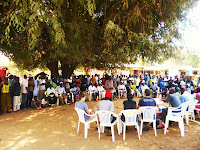 Black African magic, a.k.a. juju, seemed to be the
biggest culprit for a negative attitude towards condoms and HIV. Many people
believed that condoms themselves contain diseases and if you leave them out in
the sun then you can see the viruses and also maggots start growing inside. We
attempted to try this but they all burst after a few minutes in the heat! They
also believed that AIDS is caused by someone cursing you; hence most people
would seek advice from a witch doctor and not a medical professional. One
teacher was even fiercely accusing condoms of shortening the distance that
people can pee, as ‘back in the day they could pee for metres’…
Black African magic, a.k.a. juju, seemed to be the
biggest culprit for a negative attitude towards condoms and HIV. Many people
believed that condoms themselves contain diseases and if you leave them out in
the sun then you can see the viruses and also maggots start growing inside. We
attempted to try this but they all burst after a few minutes in the heat! They
also believed that AIDS is caused by someone cursing you; hence most people
would seek advice from a witch doctor and not a medical professional. One
teacher was even fiercely accusing condoms of shortening the distance that
people can pee, as ‘back in the day they could pee for metres’…
 We were hoping to do quite a bit of teaching in our
second phase, but due to the messed up construction timetable and on-going
success of our HIV campaigns we only managed to fit it in a couple of times.
The classrooms are simple mud structures packed with rows of battered wooden
benches and a painted on chalk board. When you walk into the classroom you
can’t help but smile as the children stand up with a chorus of good mornings
and giggles! It was a little daunting when I was presented with my first class,
who were the youngest in the school. Where the hell was I going to start?! My
Swahili was certainly put to the test, especially when my Tanzanian translator
Kenny decided to disappear for half an hour! Luckily I managed to wangle my way
through shapes, numbers, the alphabet and body parts, ready for heads shoulders
knees and toes! My chalk animal drawings went down well too and they decided to
teach me them all in Swahili before acting out the noises! I ended up teaching
for three hours I was having so much fun! My other class was with Frank for
Standard 7 doing maths in preparation for their upcoming exams, so a bit more
serious! After some Pythagoras and division I decided to liven up the lesson in
true Raleigh style - with an energiser! We selected some students to come up to
the front to act as ninjas and try not to get karate chopped; it was highly
amusing and hopefully brightened up their maths lesson! I really enjoyed
teaching in Mgongo and it has given me the confidence and motivation to do more
teaching in my future projects. I’m now considering doing a TEFL after
university (teaching English as a foreign language qualification), so we’ll see
what happens!
We were hoping to do quite a bit of teaching in our
second phase, but due to the messed up construction timetable and on-going
success of our HIV campaigns we only managed to fit it in a couple of times.
The classrooms are simple mud structures packed with rows of battered wooden
benches and a painted on chalk board. When you walk into the classroom you
can’t help but smile as the children stand up with a chorus of good mornings
and giggles! It was a little daunting when I was presented with my first class,
who were the youngest in the school. Where the hell was I going to start?! My
Swahili was certainly put to the test, especially when my Tanzanian translator
Kenny decided to disappear for half an hour! Luckily I managed to wangle my way
through shapes, numbers, the alphabet and body parts, ready for heads shoulders
knees and toes! My chalk animal drawings went down well too and they decided to
teach me them all in Swahili before acting out the noises! I ended up teaching
for three hours I was having so much fun! My other class was with Frank for
Standard 7 doing maths in preparation for their upcoming exams, so a bit more
serious! After some Pythagoras and division I decided to liven up the lesson in
true Raleigh style - with an energiser! We selected some students to come up to
the front to act as ninjas and try not to get karate chopped; it was highly
amusing and hopefully brightened up their maths lesson! I really enjoyed
teaching in Mgongo and it has given me the confidence and motivation to do more
teaching in my future projects. I’m now considering doing a TEFL after
university (teaching English as a foreign language qualification), so we’ll see
what happens!


 In between our busy project timetable we managed to fit
in some cultural experiences and a little bit of chilled time! Faudhia taught the girls how to make sweet and savoury chapattis, which were amazing! Kenny was assigned
as our language teacher, testing us on basic Swahili words and phrases. So in
return we decided to challenge the Tanzanians with some old fashioned English
tongue-twisters! I learnt a hell of a
lot about the African culture too, through observing behaviours and asking
billions of questions! The most intriguing things revolved around juju, for
instance the Tanzanians believed that certain people can fly on rice sieves as
midnight. You have to be naked of course…
In between our busy project timetable we managed to fit
in some cultural experiences and a little bit of chilled time! Faudhia taught the girls how to make sweet and savoury chapattis, which were amazing! Kenny was assigned
as our language teacher, testing us on basic Swahili words and phrases. So in
return we decided to challenge the Tanzanians with some old fashioned English
tongue-twisters! I learnt a hell of a
lot about the African culture too, through observing behaviours and asking
billions of questions! The most intriguing things revolved around juju, for
instance the Tanzanians believed that certain people can fly on rice sieves as
midnight. You have to be naked of course…
 A great experience was visiting the travelling market
that passed through Mgongo once a month. We haggled our way into some weird and
wonderful souvenirs, including machetes, cow bells and arrow heads! Freya,
Kitty and I were in awe of the hundreds of beautiful kitenge fabrics on offer,
with every print, pattern and colour imaginable! The second market fell on Eid,
which celebrates the end Ramadan. Faudhia from my team had been fasting so in
honour we all dressed up and sacrificed a goat for a thoroughly enjoyable feast!
A great experience was visiting the travelling market
that passed through Mgongo once a month. We haggled our way into some weird and
wonderful souvenirs, including machetes, cow bells and arrow heads! Freya,
Kitty and I were in awe of the hundreds of beautiful kitenge fabrics on offer,
with every print, pattern and colour imaginable! The second market fell on Eid,
which celebrates the end Ramadan. Faudhia from my team had been fasting so in
honour we all dressed up and sacrificed a goat for a thoroughly enjoyable feast!


 On our last weekend in Mgongo we decided to hike to the
mountains in the distance (more of a long stretch of steep hill). We arranged
for a local to be our guide, who insisted it would only take around six hours.
But obviously this was in Tanzanian time… The walk there was really beautiful
and the view from the top was worth every panting breath and aching muscle! The moment we reached the peak I realised how
far I had come and everything Team Majanga had achieved. We could see for miles
across the flat plains and also a waterfall nearby, so we decided to head over
for a swim! After lots of clambering and climbing we got to the base of the
waterfall. The pool beneath was sacred to the local Pagan community, so we were
only able to have a refreshing dip further downstream! After a long, sweaty day
in the relentless heat we eventually hauled our feet back to camp… Ten hours
later! It was definitely worth every second though and summed up our journey in
Tanzania.
On our last weekend in Mgongo we decided to hike to the
mountains in the distance (more of a long stretch of steep hill). We arranged
for a local to be our guide, who insisted it would only take around six hours.
But obviously this was in Tanzanian time… The walk there was really beautiful
and the view from the top was worth every panting breath and aching muscle! The moment we reached the peak I realised how
far I had come and everything Team Majanga had achieved. We could see for miles
across the flat plains and also a waterfall nearby, so we decided to head over
for a swim! After lots of clambering and climbing we got to the base of the
waterfall. The pool beneath was sacred to the local Pagan community, so we were
only able to have a refreshing dip further downstream! After a long, sweaty day
in the relentless heat we eventually hauled our feet back to camp… Ten hours
later! It was definitely worth every second though and summed up our journey in
Tanzania.

To celebrate our achievements we held an Awards Ceremony on our last night in Mgongo, complete with champagne! (Non-alcoholic unfortunately…) It was great to think about how far our team had come and everything we had done in the village. I had an incredible time living and working alongside such interesting people and have learnt so much from it. I knew it would be sad saying goodbye to Mgongo and I will really miss everyone I met, but I was glad to finally be leaving that bloody tent!


 My team were hoping to make a lot of progress in the
construction phase with the help of our project partner. Due to the horrific state
and number of primary school toilets we planned to build three new latrine
blocks for the children at Mgongo Primary. At the start we thought five weeks
of hard graft and the assistance of local fundi (builders) would be enough to
help us achieve our goal. However ‘This Is Africa’! The man delivering the
water was ill for a few days, there wasn’t enough water for the next few days,
then someone’s uncle died, our project partner never turned up, then the fundi
were going to a wedding for the following two days, we had to wait for them to
turn up each morning in ‘Tanzanian Time’, the fundi got too tired to work past 11
o’clock, and of course everyone celebrates the end of Ramadan for two more
days… It seemed to never end and our goal went from completing three toilet
blocks to finishing one, to just being able to get the bricks made!
My team were hoping to make a lot of progress in the
construction phase with the help of our project partner. Due to the horrific state
and number of primary school toilets we planned to build three new latrine
blocks for the children at Mgongo Primary. At the start we thought five weeks
of hard graft and the assistance of local fundi (builders) would be enough to
help us achieve our goal. However ‘This Is Africa’! The man delivering the
water was ill for a few days, there wasn’t enough water for the next few days,
then someone’s uncle died, our project partner never turned up, then the fundi
were going to a wedding for the following two days, we had to wait for them to
turn up each morning in ‘Tanzanian Time’, the fundi got too tired to work past 11
o’clock, and of course everyone celebrates the end of Ramadan for two more
days… It seemed to never end and our goal went from completing three toilet
blocks to finishing one, to just being able to get the bricks made!
So early each morning we lugged our tools, wheelbarrows, supply
of drinking water and medical box to the school feeling motivated to do our
best. We started by helping to dig the latrine pits, which were eventually
around 10ft deep. Next we learnt how to make the simple mud bricks that the
locals use for their houses. This involved hoeing up the ground into a pile,
pouring water over, shovelling it into a wooden cast, punching out the trapped
air, smoothing it over and then lifting off the cast whilst keeping it in shape!
After a few days of drying in the sun we had to move and place the mud bricks
into a complex stack ready to be burnt, which would increase their stability.
The bricks were fairly large and heavy so it was harder work than we originally
thought! But it was really good when we all got into it and worked together as
a team. We danced and sang along to the radio which the locals loved,
especially when we played a great Tanzanian tune ‘Dar es Salaam Stand Up’!


Due to the inconsistent schedule for the latrine construction we decided to go ahead with our secondary project instead.
 Our secondary project in Charlie 2 was a HIV and AIDS
awareness campaign. We were very lucky to have a HIV/AIDS volunteer working
with our project partner, who helped us launch our campaign in the local area.
Together we composed a presentation that included definitions, symptoms,
stages, spread, prevention, stigma and discrimination. Over our last few weeks
in Mgongo we held our awareness campaign at multiple community meetings, to
secondary school students and teachers, then to teachers and elder students at
four primary schools. I learnt a lot about HIV and AIDS from this project and
it has inspired me to get involved with other similar projects in the future.
By far the most interesting part of the campaign was the question time at the
end – it really showed us how false or little knowledge most members of the
community had on HIV/AIDS. We heard some weird and wonderful things, but the
most important thing we realised about preventing HIV was that we couldn’t just
tell people to wear condoms – They had no idea how or why. So after lots of
persuading, Thabani and Catherine made use of our bananas and box of condoms to
demonstrate this novel idea!
Our secondary project in Charlie 2 was a HIV and AIDS
awareness campaign. We were very lucky to have a HIV/AIDS volunteer working
with our project partner, who helped us launch our campaign in the local area.
Together we composed a presentation that included definitions, symptoms,
stages, spread, prevention, stigma and discrimination. Over our last few weeks
in Mgongo we held our awareness campaign at multiple community meetings, to
secondary school students and teachers, then to teachers and elder students at
four primary schools. I learnt a lot about HIV and AIDS from this project and
it has inspired me to get involved with other similar projects in the future.
By far the most interesting part of the campaign was the question time at the
end – it really showed us how false or little knowledge most members of the
community had on HIV/AIDS. We heard some weird and wonderful things, but the
most important thing we realised about preventing HIV was that we couldn’t just
tell people to wear condoms – They had no idea how or why. So after lots of
persuading, Thabani and Catherine made use of our bananas and box of condoms to
demonstrate this novel idea!

 Black African magic, a.k.a. juju, seemed to be the
biggest culprit for a negative attitude towards condoms and HIV. Many people
believed that condoms themselves contain diseases and if you leave them out in
the sun then you can see the viruses and also maggots start growing inside. We
attempted to try this but they all burst after a few minutes in the heat! They
also believed that AIDS is caused by someone cursing you; hence most people
would seek advice from a witch doctor and not a medical professional. One
teacher was even fiercely accusing condoms of shortening the distance that
people can pee, as ‘back in the day they could pee for metres’…
Black African magic, a.k.a. juju, seemed to be the
biggest culprit for a negative attitude towards condoms and HIV. Many people
believed that condoms themselves contain diseases and if you leave them out in
the sun then you can see the viruses and also maggots start growing inside. We
attempted to try this but they all burst after a few minutes in the heat! They
also believed that AIDS is caused by someone cursing you; hence most people
would seek advice from a witch doctor and not a medical professional. One
teacher was even fiercely accusing condoms of shortening the distance that
people can pee, as ‘back in the day they could pee for metres’…
All in all our awareness sessions were extremely
successful and we received some great feedback from those who attended. It has
certainly taught me a lot and I hope that it has made an impact on the
community in Mgongo.
 We were hoping to do quite a bit of teaching in our
second phase, but due to the messed up construction timetable and on-going
success of our HIV campaigns we only managed to fit it in a couple of times.
The classrooms are simple mud structures packed with rows of battered wooden
benches and a painted on chalk board. When you walk into the classroom you
can’t help but smile as the children stand up with a chorus of good mornings
and giggles! It was a little daunting when I was presented with my first class,
who were the youngest in the school. Where the hell was I going to start?! My
Swahili was certainly put to the test, especially when my Tanzanian translator
Kenny decided to disappear for half an hour! Luckily I managed to wangle my way
through shapes, numbers, the alphabet and body parts, ready for heads shoulders
knees and toes! My chalk animal drawings went down well too and they decided to
teach me them all in Swahili before acting out the noises! I ended up teaching
for three hours I was having so much fun! My other class was with Frank for
Standard 7 doing maths in preparation for their upcoming exams, so a bit more
serious! After some Pythagoras and division I decided to liven up the lesson in
true Raleigh style - with an energiser! We selected some students to come up to
the front to act as ninjas and try not to get karate chopped; it was highly
amusing and hopefully brightened up their maths lesson! I really enjoyed
teaching in Mgongo and it has given me the confidence and motivation to do more
teaching in my future projects. I’m now considering doing a TEFL after
university (teaching English as a foreign language qualification), so we’ll see
what happens!
We were hoping to do quite a bit of teaching in our
second phase, but due to the messed up construction timetable and on-going
success of our HIV campaigns we only managed to fit it in a couple of times.
The classrooms are simple mud structures packed with rows of battered wooden
benches and a painted on chalk board. When you walk into the classroom you
can’t help but smile as the children stand up with a chorus of good mornings
and giggles! It was a little daunting when I was presented with my first class,
who were the youngest in the school. Where the hell was I going to start?! My
Swahili was certainly put to the test, especially when my Tanzanian translator
Kenny decided to disappear for half an hour! Luckily I managed to wangle my way
through shapes, numbers, the alphabet and body parts, ready for heads shoulders
knees and toes! My chalk animal drawings went down well too and they decided to
teach me them all in Swahili before acting out the noises! I ended up teaching
for three hours I was having so much fun! My other class was with Frank for
Standard 7 doing maths in preparation for their upcoming exams, so a bit more
serious! After some Pythagoras and division I decided to liven up the lesson in
true Raleigh style - with an energiser! We selected some students to come up to
the front to act as ninjas and try not to get karate chopped; it was highly
amusing and hopefully brightened up their maths lesson! I really enjoyed
teaching in Mgongo and it has given me the confidence and motivation to do more
teaching in my future projects. I’m now considering doing a TEFL after
university (teaching English as a foreign language qualification), so we’ll see
what happens!


 In between our busy project timetable we managed to fit
in some cultural experiences and a little bit of chilled time! Faudhia taught the girls how to make sweet and savoury chapattis, which were amazing! Kenny was assigned
as our language teacher, testing us on basic Swahili words and phrases. So in
return we decided to challenge the Tanzanians with some old fashioned English
tongue-twisters! I learnt a hell of a
lot about the African culture too, through observing behaviours and asking
billions of questions! The most intriguing things revolved around juju, for
instance the Tanzanians believed that certain people can fly on rice sieves as
midnight. You have to be naked of course…
In between our busy project timetable we managed to fit
in some cultural experiences and a little bit of chilled time! Faudhia taught the girls how to make sweet and savoury chapattis, which were amazing! Kenny was assigned
as our language teacher, testing us on basic Swahili words and phrases. So in
return we decided to challenge the Tanzanians with some old fashioned English
tongue-twisters! I learnt a hell of a
lot about the African culture too, through observing behaviours and asking
billions of questions! The most intriguing things revolved around juju, for
instance the Tanzanians believed that certain people can fly on rice sieves as
midnight. You have to be naked of course… A great experience was visiting the travelling market
that passed through Mgongo once a month. We haggled our way into some weird and
wonderful souvenirs, including machetes, cow bells and arrow heads! Freya,
Kitty and I were in awe of the hundreds of beautiful kitenge fabrics on offer,
with every print, pattern and colour imaginable! The second market fell on Eid,
which celebrates the end Ramadan. Faudhia from my team had been fasting so in
honour we all dressed up and sacrificed a goat for a thoroughly enjoyable feast!
A great experience was visiting the travelling market
that passed through Mgongo once a month. We haggled our way into some weird and
wonderful souvenirs, including machetes, cow bells and arrow heads! Freya,
Kitty and I were in awe of the hundreds of beautiful kitenge fabrics on offer,
with every print, pattern and colour imaginable! The second market fell on Eid,
which celebrates the end Ramadan. Faudhia from my team had been fasting so in
honour we all dressed up and sacrificed a goat for a thoroughly enjoyable feast!


To celebrate our achievements we held an Awards Ceremony on our last night in Mgongo, complete with champagne! (Non-alcoholic unfortunately…) It was great to think about how far our team had come and everything we had done in the village. I had an incredible time living and working alongside such interesting people and have learnt so much from it. I knew it would be sad saying goodbye to Mgongo and I will really miss everyone I met, but I was glad to finally be leaving that bloody tent!
Wednesday, 2 October 2013
Our Projects in Tanzania
 For the first four weeks at our village the main focuses
of our project were integrating with the community, action research and
awareness raising.
For the first four weeks at our village the main focuses
of our project were integrating with the community, action research and
awareness raising.
To integrate with the local community we introduced
ourselves in a number of ways. Firstly we visited the market every day to
familiarise ourselves with the stall owners and explained our
role with Raleigh ICS and SEMA. At first we got lots of unwelcoming looks as
they thought we would just be there for the goldmine that was on the outskirts
of the village. I don’t know if I was expecting them to welcome us with open
arms, but I was a bit thrown off by this and couldn’t understand why they were
being so unfriendly and would just stare or demand money. However when people
started listening to our reasons for staying in the area and what we planned to
do they gradually became more accepting, making us feel at ease. The villagers
began to learn our names and faces and would try their best attempt at speaking
basic English to please us. We met some very kind people in the village,
especially the village leaders who welcomed us back to visit whenever possible!
 As most of our projects would involve the schools we
thought it was essential to get to know the students and teachers to build
trust and respect. To do this my team held sports days at Mgongo Primary and
Kibululu Primary Schools, with sack races, relays, three-legged and traditional
running races. The children had never done anything like this before so were
very excited yet nervous! The team were feeling a bit anxious about controlling
hundreds of kids speaking a different language, especially as order and
organisation doesn’t really exist in Africa! But with their co-operation and
the help of the prefects we somehow managed to run it all smoothly and it was a
really fun day. The highlight for me was being surrounded by all the children
at the end of the day, fascinated by our hair and skin, then singing us a song
in unison. It really was special to hear and is one of my favourite memories
with the children in Mgongo.
As most of our projects would involve the schools we
thought it was essential to get to know the students and teachers to build
trust and respect. To do this my team held sports days at Mgongo Primary and
Kibululu Primary Schools, with sack races, relays, three-legged and traditional
running races. The children had never done anything like this before so were
very excited yet nervous! The team were feeling a bit anxious about controlling
hundreds of kids speaking a different language, especially as order and
organisation doesn’t really exist in Africa! But with their co-operation and
the help of the prefects we somehow managed to run it all smoothly and it was a
really fun day. The highlight for me was being surrounded by all the children
at the end of the day, fascinated by our hair and skin, then singing us a song
in unison. It really was special to hear and is one of my favourite memories
with the children in Mgongo.
To engage with the secondary school students we joined in
with netball and football tournaments on a Friday afternoon for a few weeks. At
secondary school they get taught all their lessons in English so it was
slightly easier to attempt speaking to them, although they all got very shy!
They loved that the British volunteers joined in with the sports too and liked
to laugh at us getting tired in the heat!

As mentioned in my post ‘Welcome to Mgongo – Karibu Sana’ we conducted household surveys for
our action research about water and sanitation. The results of this
subsequently guided our awareness raising, infrastructure construction and
secondary project.

For our awareness raising we decided to do a hand hygiene
campaign with five schools in the area. In order to make it effective and
sustainable we knew we had to plan it thoroughly. The team gathered for hours
of meetings to discuss and plan everything we were to do in detail. As we were
the first Raleigh ICS group in Tanzania there were no resources available from
any previous teams or from the project partner either, so it took a while to
prepare every campaign, session and meeting. This was still within our first
few weeks so to begin with we had some slight language barrier difficulties, as
the Tanzanian volunteers were having trouble keeping up with the fast incoherent
discussions of the British. Hence part of our challenge was to continuously
consider this and to make sure everyone understood every detail. After all, we
were part of a team and each individual needed time to get involved. So after
hours of discussions and decisions we had a plan of action to help the water,
health and sanitation in Mgongo.

Once the planning and organising were complete we were
finally able to begin the health awareness lessons. Our aim was to teach the
schools about hand hygiene in order to help prevent diseases and illnesses. For
the knowledge to be relevant we had to first provide the schools with hand
washing facilities, i.e. a ‘Tippy-Tap’. A tippy-tap is a very basic but
effective invention that has minimal surface contact and water wastage. It is
simply three long wooden sticks, a jerry can with a hole cut in the side,
string and a stick for the pedal. So to access the water you push your foot down
on the pedal, which tips the jerry can via the attached string, and the water
will come out like a tap – voila! We built two tippy-taps by the latrines at
each school to encourage the children to use it after going to the toilet. We
then conducted the health awareness sessions in four parts. First of all in
introduction into why you should wash your hands, secondly a play about
protecting your friends and family from illness, thirdly an explanation and
demonstration of the tippy-tap and finally a germ game using flour to represent
how thoroughly you must wash your hands! It was only basic information, but the
children were completely unaware of why it is essential for them to wash their
hands. It was such a great moment to first see a young boy running straight to
the tippy tap after the toilet to try it out – I really hope we educated the
teachers enough too for it to continue.
 Another on-going project throughout our time in Mgongo
was the Women’s Group. It was the first female social group to be set up in the
area, so we found that it was a bit slow to get going and we began to doubt any
success! However after a few meetings we all started to really enjoy it and
have a really good time, despite the huge language barrier! We all spoke about
our lives, families and ambitions, which helped us to understand each other a
lot more. They also shared music and crafts that they had made and we showed
them our photos and art work. Mama Musa showed us a bowl she had weaved using
dried grass, and because we had said we loved it she presented all the girls with
one as a leaving gift! With the whole women’s group we also made a doormat and
netball bibs together; the netball bibs were an on-going project for the girls
at the Secondary School to encourage them to be active and enjoy sports. In our
last week in Mgongo Mama Musa invited us to her house for tea and to build her
a Tippy-Tap outside her latrine. It was a simple mud house, yet she had made it
feel very friendly and cosy! It was very sad to say goodbye to all the women
from the group, but they generously welcomed us back to stay with them whenever
we could J
Another on-going project throughout our time in Mgongo
was the Women’s Group. It was the first female social group to be set up in the
area, so we found that it was a bit slow to get going and we began to doubt any
success! However after a few meetings we all started to really enjoy it and
have a really good time, despite the huge language barrier! We all spoke about
our lives, families and ambitions, which helped us to understand each other a
lot more. They also shared music and crafts that they had made and we showed
them our photos and art work. Mama Musa showed us a bowl she had weaved using
dried grass, and because we had said we loved it she presented all the girls with
one as a leaving gift! With the whole women’s group we also made a doormat and
netball bibs together; the netball bibs were an on-going project for the girls
at the Secondary School to encourage them to be active and enjoy sports. In our
last week in Mgongo Mama Musa invited us to her house for tea and to build her
a Tippy-Tap outside her latrine. It was a simple mud house, yet she had made it
feel very friendly and cosy! It was very sad to say goodbye to all the women
from the group, but they generously welcomed us back to stay with them whenever
we could J
So that’s what we got up to in our first five weeks in
Tanzania. I will update you again on the second phase soon!
..x
Monday, 23 September 2013
A Day in The Life of Team Majanga
 |
| Charlie 2 Before a Hike |
After three weeks at home I’ve finally started to get
used to the reality of life away from Africa. I have found it quite difficult
to adjust back to life in the UK, from attitudes to surroundings to our own issues.
The bizarre lifestyle we had living in Tanzania became normal after ten weeks
and it was difficult at first to see it from an outsider’s point of view. I
learnt a lot from my time away with Raleigh ICS about the reality of life in
rural villages such as Mgongo, how international development can benefit such
communities but also challenging myself to live in basic conditions in the
middle of Africa with a team of thirteen diverse people.
So to explain a little better here’s a day in the life of
Team Majanga…
After a luxurious night on a thin roll matt under a
suffocating mosquito net in a tent full of eight people with walls constantly
flapping violently in the wind, it was time to wake up feeling fresh for the busy
day ahead. Breakfast calls varied between 5am and 8am, depending on the plans
for the day. This would be served by the pair on camp duty – one British and
one Tanzanian. This was one of four daily duties, which involved cooking each
meal and staying guard at the camp all day.
 |
| Our Home for Ten Weeks |
The daily food at the camp was carbs, carbs, and some
more carbs. For breakfast we had porridge every single morning, which I thought
was really nice to start with. But after weeks and weeks of the stuff and when
the sugar, chocolate and milk powder rations ran out, it wasn’t quite so
appetising. But still, eating out of a mess-tin watching the sun rise over the
mountains is something quite amazing!
Depending on our schedule, the team would have to be
promptly ready after breakfast to begin surveys, hold meetings all morning,
head to the schools or practice their campaign role. We tried to throw in some
Raleigh energisers to liven us all up a bit too! One of my favourites was Last
Man Standing… everyone had to fill their mouths up with as much water as
possible, with the aim to make everyone else laugh. The trick was to avoid them
spitting it out over you!
Those on camp duty would then have the opportunity to use
their ration of water to wash their clothes for the week in a bucket, which
would usually be taken over by the Tanzanians tutting at our inability to clean
them by hand! I took full advantage of my camp duties to be my ‘pamper day’ of fresh
laundry, clean hair and scrubbed feet! All with less than just one bucket of
water.
It’s shocking to think how much water we use a day back
in the UK. Old style toilets use around 15 litres just for one flush, but newer
ones still use 4-6 litres. A washing machine uses up approximately 50 litres for
one spin and a dishwasher can use 20 litres of water. Obviously this is better
than a few decades ago due to advanced technology and design, yet I find it
shocking to realise how much we water we waste and completely take it for granted.
In the UK we use 150 litres of water on average per day. For one person. In the
scorching heat of Mgongo where we were constantly sweating and drinking a great
deal more than at home we used 200 litres per day. For thirteen people. That’s only
15 litres each per day for cooking, cleaning, drinking, washing clothes hands
and showering. It has made me think a lot about the water usage in my household
and I would definitely encourage others to consider their own habits to try and
save water.
 |
| The Village Water Source |
The people of Mgongo begged us for a water tap in their
village. A tap would mean they have many more hours spare each day to focus on the
important things – farming their crops, looking after their livestock and
educating their children. Every morning the students would have to leave school
for a couple of hours to fill their jerry cans up from the bore holes in the
dry river bed to have some more unclean water to drink. For them, it affects so
much more than just their water though. It’s their education, livelihood and
health. Unfortunately we did not have the time or resources to begin
construction of a pump for them, but we informed our project partner SEMA and
hopefully the next Raleigh ICS group will be able to build one for the village,
which is great news!
So back to life at camp… After a busy morning the heat
tends to exceed 40 degrees to make the rest of the day even more tiring! We
attempted to get a decent tan for ten weeks in Africa, but simply gave up due
to the unbearable heat. “Sunbathing? Too busy saving the world!”
The afternoon would be a continuation of one of our many
projects, with the fantastic translations from our Swahili speaking volunteers.
We would not have been able to achieve half of what we did without a mixed team
of British and Tanzanians, which is such a great and unique aspect of Raleigh. The
Tanzanians helped us to integrate into our new community but also learn how
much they were connected to the Western World. For instance we were quite
surprised in our minibus journeys to Kizonzo School to have the delights of Westlife
and Celine Dion tracks repeated each time! Our Tanzanian Frank was also very
upset to hear that Westlife had split up and would no longer be releasing new
songs… It’s odd what parts of British life they have taken on board!

For camp duty most of the day would consist of sitting on
the floor chopping, peeling and cooking in true African style. Our gas stove decided
to break one week too so we got used to tackling the wind and balancing the pan
on rocks for hours on a camp fire! Lunch and dinners would revolve around even
more carbs (rice, potatoes or spaghetti) with a sauce based on just onions and
tomatoes. Now I honestly never want to see another potato in my life!
The basic food provoked the whole camp to crave certain luxuries,
with a good old McDonald’s being the British favourite! The prospect of
chocolate always excited the British girls too, so when our Deputy Project
Leader visited on ‘the loop’ it was all we could think about for days! We also
looked forward to the rare treat of fried chicken and chips, although the
preparation time of slaughtering the chicken and peeling 10kg of potatoes
deterred us from doing it often!

Another thing that was a million miles away from us in
camp life was communication. It was slightly odd but very refreshing not to
think about checking your phone or Facebook constantly and be brainwashed by
all the mass crap that many people revolve their lives around. I lived without any
phone or internet completely for ten weeks, until my last day when I called my
mum to let her know I was still alive and checking for a lift home from the
airport! Our only form of communication therefore was letters. This was really
cool to start with, but after finding time to write what felt like a million
letters it became a bit of a chore to repeat everything over and over! I would
have very much appreciated a desk instead of the floor too! Living in camp made
me miss having clean feet and a carpet too, especially when you’re showering
standing in mud and can only expect your wet feet to collect the sand in the
tent! As for wildlife, apart from hyenas and a few baboons we didn’t get to see
much unfortunately. Well unless you count cows, goats, chickens, ants, flies,
beetles, mosquitoes…

So after finishing our project work for the day it would
be time to visit the local market, play with the children hanging around camp
or join the queue for a showering with a bucket and jug. Despite the barren
landscape and sand, the village was certainly full of colour. From the bright bold
kitenges worn by the local women to the rows of fresh fruits and vegetables, it
was what I’d always pictured African life to be like! Around our camp there
were endless fields of dried sunflowers and maize, waiting for the first drop
of rain from the wet season in November. At first we found it really odd to see
a bunch of young children attending the fields or herding the cows and goats to
graze. They couldn’t have been older than eight years old, yet they were left
alone to help the family to maintain their land. This is Africa.
 |
| Raheli in the middle with her sisters and I |
For me a really great thing about living in Mgongo for so
long was hearing a little voice shouting ‘Emma!’ when walking around even the
remotest part of the village! The children were always so inquisitive and
excited to see people from outside their area, let alone country! Whether we
were at the school, market or just walking we would hear our names being
called, so we also got them shouting “Chapattis!” and “Sausages!” Another thing
they absolutely loved was photographs. Normally they wouldn’t be able to
recognise themselves but would always point out their friends and giggle a lot!
One little girl in particular stole my heart, her name was Raheli. She was only
in Standard 4 at school, but was really eager to learn. Raheli taught me
Swahili with my phrase book by correcting my pronunciation and wanted to be
able to read in English so borrowed my book to practice. It is really sad to
know that opportunities in rural communities like Mgongo are limited, with so
few children making it to secondary school. However with organisations like
Raleigh and ICS it is possible to change that and I have been inspired to carry
on helping children like Raheli to have more opportunities in life.

So at the end of a busy day when the sun had gone down
and the stars were filling the sky, it was time for bed again. It did take a
while to get used to sleeping on the hard floor, especially with someone else's
feet kicking your head, the tent going mental in the wind and still around 28
degree heat! One night we even got the treat of a surprise visit from some
hyenas. Their distinctive call was suddenly heard around our campsite, alarming
quite a few of our team members! It was also a bit unnerving that our tent door
was ripped down the seam and none of the zips worked so it was just a gaping
hole… But in true Majanga fashion we worked as a team to make the most noise
possible at 3am to scare the hyenas away from the camp, with cow bells, clanging
mess tins and peculiar vocals – it appeared to work! Another eventful day at
Camp Majanga done, the next exciting one about to begin J
Wednesday, 31 July 2013
Welcome to Mgongo - Karibu Sana
10th July
When Charlie 2 arrived in the rural village of Mgongo our title of 'Team Majanga' was fully earned - we had the wrong tent poles, a missing tent, an hour walk to water, broken water filters, no shower and a collapsing long drop! For those of you who aren't aware of what a long drop is, we had to dig a hole in the ground for our toilet for ten weeks... It was certainly an interesting experience and a few team members admitted to dropping some items down to the depths! We were all very hot and tired after our day of finding an appropriate site and setting up camp, but battled through the majangas and kept smiling :) When the sun set over the barren landscape we thought the amazing view made it all worth the effort. The night sky was incredible too - I've never seen so many stars in my life!
Now our camp feels like home, even though we are all squashed up into one tent! The water situation became a huge problem, so luckily now we have Emanuel who delivers it on a bike twice a day from a pump in a nearby village. We have also built a tarpaulin shower, looking out into the middle of Africa, pretty amazing! Unfortunately there's not much positive to say about the long drop....
 Since our team of thirteen have been in Mgongo we have been really involved with the community in order to launch our water and sanitation project. First of all we conducted baseline surveys about water access, health issues and sanitation with our local project partner SEMA. This involved interviewing houesholds within the local community and looking at their latrines (if they even have one). It has been quite shocking, as most toilets are a dirty tiny pit or a slit between two planks of wood, with only a metre high wall to protect it. No door, no roof and no hand washing facilities. We also asked about access to water, finding that most households spend over four hours each day collecting water from the boreholes in the dry river bed, usally with the assistance of a cattle-drawn cart. It has definitely made us appreciate a lot here and realise how much Raleigh and ICS have the potential to help.
I am really excited about seeing some visible progress in Mgongo now. After we have compiled our survey results we are going to discuss which area in the community needs the most help, which will probably be latrines in the local primary school. Currently they have 8 drop holes for 600 students, which are poorly built and already falling down. They don't have enough water to drink so washing hands is not a priority for them currently. The school children seem to be amazed by seeing 'mzungu' (white people) for the first time! They often come to the camp and just watch what we are doing or play football with the guys. Our team have are currently planning activities such as sports days with the schools to meet all the children properly before we do health and hygiene workshops with them. We also have plans to set up a women's group which will be the first one of its kind in this area.
It is only early days but I feel like we are already making progress and cannot wait to get fully stuck in with the community. So for now, kwa heri!
Emma ..x
 |
| Camp Neighbours |
 |
| The Sunset |
 |
| Our Shower |
 |
| Putting Up Our Tent |
Now our camp feels like home, even though we are all squashed up into one tent! The water situation became a huge problem, so luckily now we have Emanuel who delivers it on a bike twice a day from a pump in a nearby village. We have also built a tarpaulin shower, looking out into the middle of Africa, pretty amazing! Unfortunately there's not much positive to say about the long drop....
 Since our team of thirteen have been in Mgongo we have been really involved with the community in order to launch our water and sanitation project. First of all we conducted baseline surveys about water access, health issues and sanitation with our local project partner SEMA. This involved interviewing houesholds within the local community and looking at their latrines (if they even have one). It has been quite shocking, as most toilets are a dirty tiny pit or a slit between two planks of wood, with only a metre high wall to protect it. No door, no roof and no hand washing facilities. We also asked about access to water, finding that most households spend over four hours each day collecting water from the boreholes in the dry river bed, usally with the assistance of a cattle-drawn cart. It has definitely made us appreciate a lot here and realise how much Raleigh and ICS have the potential to help.

 |
| Mgongo Primary School Toilets |
It is only early days but I feel like we are already making progress and cannot wait to get fully stuck in with the community. So for now, kwa heri!
Emma ..x
Subscribe to:
Posts (Atom)